Top

2026 Best Arched Glass Door Styles for Global Buyers?

In 2026, the Arched Glass Door is moving beyond a decorative entrance. It now shapes daylight, circulation, security, and the emotional character of a building. Global buyers are comparing slim steel frames, warm timber profiles, aluminum systems, and oversized pivot designs. Each option creates a different visual rhythm.

Architect Sarah Susanka offers a useful design principle: “The best rooms have something to say about the people who live in them.” Her observation applies to arched doors, too. A soft interior arch may suit a Mediterranean villa, while a narrow black frame can strengthen a modern hotel lobby. The door should feel intentional, not simply fashionable.

Performance still matters.

During supplier evaluations, buyers should inspect hinge quality, gasket compression, drainage paths, glass certification, and hardware availability. A beautiful door that leaks during monsoon rain is not a successful purchase. Neither is a heavy pivot panel that becomes difficult to operate after installation. These details often appear in drawings, yet they become real beside a threshold, a wet floor, or a busy entrance.

This guide examines the best Arched Glass Door styles for international projects in 2026. It considers aesthetics, thermal performance, safety glazing, customization, installation conditions, and long-term maintenance. Regional building requirements differ, so buyers must verify technical documents with qualified local professionals. No single style works everywhere. That is the uncomfortable part.

Some recommendations may also require refinement as materials, prices, and testing standards change. Still, careful comparison can turn an attractive arch into a dependable architectural feature.
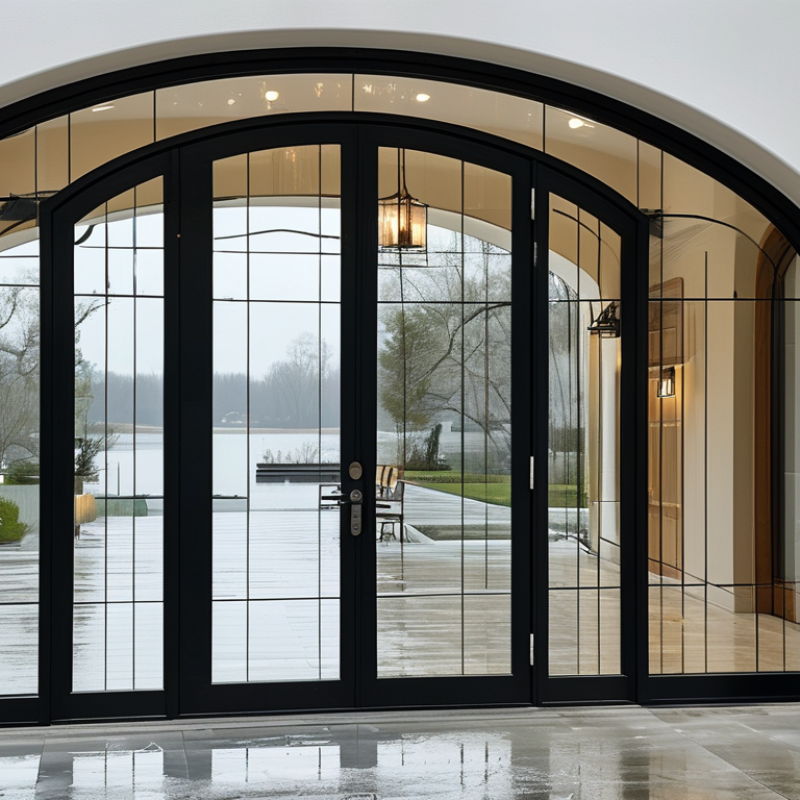
2026 Best Arched Glass Door Styles for Global Buyers?

Arched Glass Door Design Fundamentals for Global Buyers

An arched glass door begins with structure, not decoration. The curve must match the wall opening, frame depth, hardware load, and drainage path. Measure the spring line, radius, sill height, and clear passage before selecting glass. A beautiful arch can still create an awkward threshold.

Energy performance deserves equal attention. The U.S. Department of Energy estimates that windows can cause 25–30% of residential heating and cooling energy use. For global projects, specify low-emissivity glazing, insulated frames, and a suitable solar heat gain coefficient. The International Energy Agency reports that buildings consume about 30% of global final energy. An arched door will not reduce that figure by itself.

Safety choices should reflect local climate and regulations. Laminated glass helps retain fragments after breakage, while tempered glass offers improved impact resistance. In windy or coastal locations, engineers should check pressure ratings, corrosion resistance, and water penetration. In hot climates, a shaded arch with selective glazing may outperform clear glass. In cold regions, thermal breaks matter more. Door operation also needs testing; heavy curved panels can strain hinges and seals. A recurring design mistake is prioritizing the arch profile over maintenance access. It looks refined at handover, but cleaning the upper curve may become frustrating. Performance data, mock-up testing, and careful installation remain more reliable than visual assumptions.

Popular Arched Glass Door Styles in 2026

Popular arched glass door styles in 2026 combine soft curves with practical performance. Slim, dark-framed doors remain popular for modern homes, apartments, and hospitality spaces. Their narrow profiles create a taller visual opening without adding heavy decoration. Clear glass suits bright interiors, while low-iron glass gives a cleaner, almost invisible appearance.

Fluted and reeded glass is gaining attention among global buyers. It filters daylight, adds privacy, and produces changing shadows across floors. Timber-framed arched doors bring warmth to Mediterranean, coastal, and heritage-inspired interiors. For compact rooms, an arched sliding door can save valuable floor space. Double French-style doors work better in wide entrances, especially when visitors, furniture, or equipment must pass through easily.

Details matter more than photographs suggest. Check the wall opening, arch radius, drainage, seal quality, and hardware finish before ordering. In humid or coastal climates, moisture-resistant materials and suitable protective coatings deserve careful attention. Energy-efficient insulated glass may improve comfort in regions with strong temperature changes. Tempered or laminated safety glass is also a practical consideration, subject to local building requirements.

A dramatic arch can still feel awkward.

Some buyers choose a narrow curve that limits access. Others overlook the swing path and discover furniture conflicts after installation. Accurate site measurements, clear technical drawings, and professional fitting reduce these avoidable mistakes. The most attractive style is not always the most suitable one. A quieter design, matched to the building’s climate and daily use, may perform better for years.

Materials, Glass Options, and Frame Finishes

For 2026, arched glass doors are moving toward softer shapes and more durable materials. Aluminum remains popular because it resists moisture, stays stable, and supports slim curved frames. Steel offers greater visual strength, but it usually needs careful corrosion protection. Timber creates warmth and texture. However, it demands regular sealing in humid regions.

Glass selection should match climate, privacy needs, and door size. Low-iron glass gives a cleaner, brighter view with less green tint. Laminated glass helps reduce noise and remains attached after breakage. Tempered glass handles impact better, but it cannot be cut after treatment. Double glazing can improve insulation, especially when paired with a suitable spacer and sealed edge.

Think about heat gain.

Frame finishes change both appearance and maintenance. Powder-coated colors provide consistent coverage and suit coastal or high-traffic projects when correctly specified. Anodized finishes offer a metallic look and resist surface wear. Wood finishes feel more natural, though sunlight may cause uneven fading. Dark frames can define the arch beautifully, yet they often reveal dust and fingerprints sooner. Matte surfaces hide small marks better than glossy ones. Still, finish performance depends on preparation, drainage, and installation quality. A beautiful door may disappoint if the frame collects water at its lower curve. Local building requirements should also guide glass safety, thermal performance, and hardware selection.

Performance, Safety, and Climate Considerations

2026 Best Arched Glass Door Styles for Global Buyers

Performance, Safety, and Climate Considerations

Arched glass doors create a softer entrance, but their curved geometry demands careful engineering. The arch should remain rigid under wind pressure, repeated opening, and seasonal movement. A strong frame, accurate reinforcement, and even gasket compression help prevent leaks and glass stress. Ask for documented air, water, and structural performance testing. Photos alone are not enough.

Safety begins with the glass specification. Laminated safety glass can retain fragments after impact, while tempered glass offers strong resistance to thermal shock. In large or frequently used doors, combining both may provide better protection. Low-iron glass improves clarity, but it can increase solar heat gain without a suitable coating. Check local building requirements before selecting thickness, opening direction, and hardware.

Climate changes the best style. In hot regions, low-emissivity coatings, shaded arches, and insulated frames can reduce indoor heat. Cold climates need warm-edge spacers and reliable seals around the curved head. Humid or coastal sites require corrosion-resistant hardware and planned drainage. Windy locations may need stronger anchoring than the door’s appearance suggests.

Installation matters greatly. A perfect door can fail in a poorly prepared opening. Confirm wall movement, threshold height, and surrounding waterproofing before delivery. I have seen attractive arches develop condensation because the frame was treated as decoration, not part of the building envelope. That mistake is easy to repeat. Global buyers should request test reports, maintenance guidance, and replacement-part availability in writing.

2026 Best Arched Glass Door Styles for Global Buyers

Performance, Safety, and Climate Considerations

The chart compares representative center-of-glazing performance for common glass build-ups used in arched glass doors. Lower U-values indicate better insulation, while lower SHGC values reduce solar heat gain in hot and sunny climates.

Cold climates
Low-e argon double or triple glazing can reduce heat loss. Select a thermally improved frame and warm-edge spacer for better whole-door performance.
Hot and sunny climates
Use a lower-SHGC low-e coating, external shading, and solar-control glass to limit overheating through large arched openings.
Safety requirements
Tempered or laminated safety glass should be selected according to local impact, human-safety, wind-load, and glass-retention requirements. Final classification requires product testing.

Data basis: representative center-of-glazing values commonly used in fenestration engineering comparisons. Actual whole-door U-factor and SHGC vary with frame material, arch geometry, glass size, spacer, coatings, installation, and local standards.

How to Select the Right Arched Glass Door Supplier

Choosing the right arched glass door supplier requires more than comparing photographs and quoted prices. A graceful 2026 design may use slim frames, fluted glass, or a dramatic black finish. However, the supplier must understand structure, weather exposure, and daily use.

Ask for detailed drawings, glass specifications, frame materials, and hardware information. Confirm whether the glass is tempered or laminated, and request test documents where appropriate. Check compliance with the building requirements in your project’s location. A reliable supplier should explain wind loads, water resistance, thermal performance, and safety details in clear language.

Look closely at production capability. Can the factory control curved measurements accurately? Can it provide a physical corner sample before mass production? Inspect welding, drainage channels, gasket fitting, and surface consistency. Small defects become obvious around an arch. Very obvious.

Review installation guidance, packaging methods, replacement support, and warranty terms. Clear delivery schedules matter, especially for overseas projects. Ask how the supplier handles damaged glass, color variation, or incorrect dimensions. Their response often reveals more than a polished catalog.

Do not select a supplier only because the price is low. A cheaper door may require stronger site adjustments later. That assumption needs checking, though, because premium pricing does not guarantee better workmanship. Compare at least three suppliers using the same specification sheet. Record every promise in writing, including tolerances, inspection stages, and after-sales responsibilities. A thoughtful supplier welcomes difficult questions and admits what cannot be guaranteed.