China Top Pet Carpet Manufacturers for Global Buyers?
Choosing China’s top Pet Carpet manufacturers requires more than comparing prices or glossy product photos. Global buyers need suppliers with proven production experience, clear specifications, and dependable export communication. A reliable manufacturer should explain fiber types, backing materials, pile density, edge finishing, and cleaning performance. These details matter when a carpet faces muddy paws, loose fur, scratching, and frequent washing.
The best suppliers usually provide samples before large orders. Buyers can test odor, shedding, colorfastness, non-slip backing, and drying time. A Pets Carpet made for apartments may need different features from one used in kennels, grooming salons, or retail stores. Factory audits, production videos, inspection reports, and customer references can also reveal practical capabilities. Certifications may support confidence, but they should be verified rather than accepted blindly.
This guide explores manufacturers that serve international buyers and explains how to compare them fairly. It considers customization, minimum order quantities, packaging, lead times, quality control, and after-sales support. Some supplier information can change quickly. That is a limitation worth remembering. Product claims may also vary between factories and actual shipments. Careful sampling remains essential.
China offers broad manufacturing capacity, but not every low-cost option delivers consistent results. Experienced buyers should ask precise questions and document agreed standards. A trustworthy partnership grows from transparent communication, realistic testing, and careful follow-up. The goal is not simply to find the cheapest carpet. It is to select a durable, safe, and commercially suitable solution for pets and their owners.
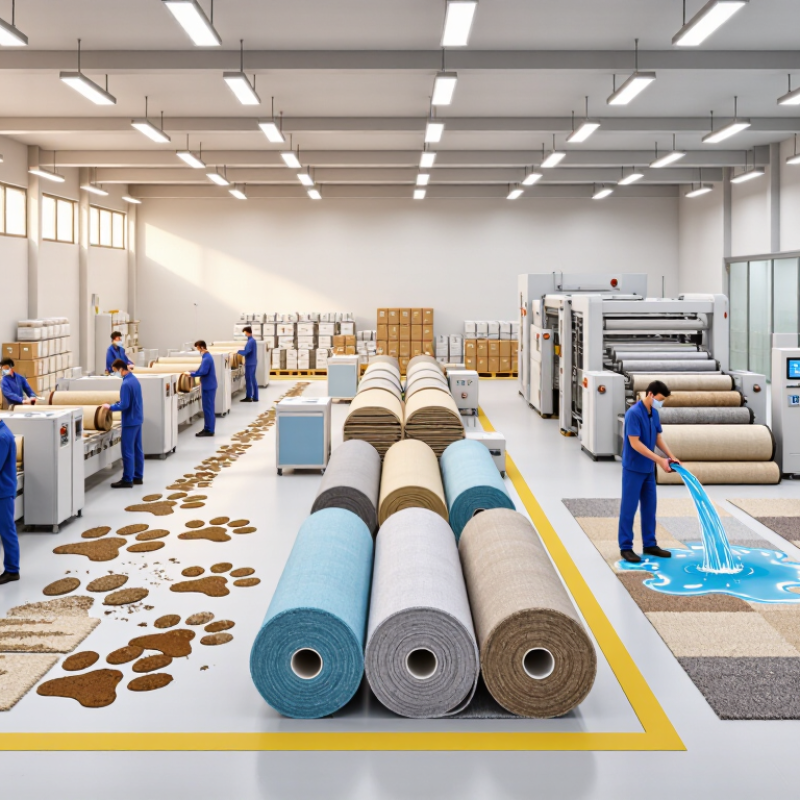
What Defines a Top Pet Carpet Manufacturer in China?
What Defines a Top Pet Carpet Manufacturer in China?
A top pet carpet manufacturer understands daily pet behavior, not only textile production. Dogs drag wet paws across entrances, while cats may scratch exposed edges. Reliable factories design around these details. They select dense fibers, secure backing, and surfaces that resist snagging. Easy-clean materials also matter when accidents happen at home.
Experience should appear in the sample room. A capable manufacturer can explain fiber type, pile height, backing composition, and cleaning limits clearly. It should provide test data for colorfastness, abrasion resistance, odor control, and formaldehyde levels. Claims need evidence. A small sample is useful, but it cannot prove long-term performance. Real testing is better.
Quality control must continue beyond production. Inspectors should check dimensions, stitching, surface defects, packaging, and batch consistency. Clear records make problems easier to trace. Communication also reveals professionalism. Strong suppliers answer technical questions directly and report delays early. Still, no factory gets everything right. A buyer should request revised samples when edges curl or colors shift slightly. That extra review may feel slow, but it protects the final shipment. Reliable manufacturers respect this process and treat feedback as part of product development.
How to Evaluate Chinese Pet Carpet Manufacturers
China Top Pet Carpet Manufacturers for Global Buyers?
Evaluating Chinese pet carpet manufacturers requires more than comparing prices. The American Pet Products Association reported US pet spending reached $147 billion in 2023. It forecast $150.6 billion for 2024. This growth supports demand for washable, stain-resistant, and low-odor carpets. Ask each factory for recent production photos, material specifications, and batch-level inspection records. A serious supplier should explain fiber density, backing composition, dye stability, and washing limits clearly.
Order samples before discussing large quantities. Test them with fur, muddy paws, water, and repeated vacuuming. Check whether edges curl after washing. Request independent reports for colorfastness, formaldehyde, heavy metals, and slip resistance. Verify the laboratory, test date, and sample identity. ISO 9001 certification can indicate controlled procedures, but it does not guarantee product quality. Visit the facility, or use an independent auditor. Review machinery, warehouse conditions, worker training, and corrective-action records. Capacity claims are sometimes optimistic.
Tips: Compare three samples under identical tests. Measure pile height and backing weight yourself. Ask for a pre-production sample and written tolerances. Clarify packaging, replacement rules, lead times, and minimum order quantities. My own checklist has one weakness: paperwork can look excellent while daily production remains inconsistent. Therefore, inspect a second batch before signing a long-term agreement. Small defects often appear only after repeated washing.
Manufacturing Standards, Materials, and Quality Control
China Top Pet Carpet Manufacturers for Global Buyers?
Demand is rising, but pet carpets need more than attractive patterns. APPA’s 2024 State of the Industry report valued U.S. pet spending at 152 billion dollars. FEDIAF’s 2024 Facts and Figures report counted about 299 million pets in European households. These figures encourage Chinese manufacturers to improve production consistency, not simply increase volume.
Reliable factories commonly use polypropylene, polyester, or recycled PET for the surface layer. Each material should be tested for colorfastness, abrasion resistance, shedding, and odor. A dense, low-pile surface is easier to clean and less likely to trap claws. TPE or rubber backing can improve grip, but buyers should request migration and slip-resistance test results. Materials should also meet applicable chemical requirements, including limits on restricted dyes, formaldehyde, and heavy metals.
Quality control should begin with incoming yarn inspection and continue through final packing. Strong suppliers maintain batch records, calibrated testing equipment, and documented inspections under systems such as ISO 9001. Independent laboratories can verify REACH-related chemical compliance and product safety claims. A certificate alone is not proof. Some suppliers still check only appearance, missing uneven backing or unpleasant odors after washing. Buyers should approve a sealed sample, define acceptable defect limits, and conduct pre-shipment inspections. Small details matter. Yet no process is perfect, so honest manufacturers should disclose testing limits and corrective actions.


