Choosing the right modular containers begins with understanding how each type performs in real conditions. Storage containers prioritize secure space, weather resistance, and easy access. Office units add insulation, lighting, electrical systems, and comfortable work areas. Accommodation containers require stronger attention to ventilation, plumbing, privacy, and thermal performance. Other common options include classrooms, retail units, medical rooms, kitchens, and sanitary facilities.
Each design serves a different operational need. A construction site may need a rugged office beside a locked storage unit. A school project may require several connected classrooms with wide doors and safe circulation routes. A temporary clinic needs cleanable surfaces, reliable utilities, and carefully planned patient flow. These details affect cost, installation time, maintenance, and user safety.
Small details matter. A lot.
Reliable selection should combine manufacturer documentation, project experience, and professional inspection. Buyers should compare frame materials, insulation ratings, corrosion protection, load capacity, and connection methods. Local building requirements may also influence foundations, fire protection, accessibility, and electrical installation. Specifications can look impressive on paper, yet poor ventilation or weak drainage may create daily problems.
There is no universal winner. Modular containers differ because projects differ. Even a well-designed unit may need modification after delivery. That possibility deserves honest planning, not optimistic assumptions. This guide examines the top types of modular containers and explains where each option works best, what limitations to expect, and which practical questions deserve attention before purchase or rental.
Modular containers are prefabricated units built in controlled sections and assembled where they are needed. They may serve as offices, storage rooms, classrooms, clinics, or temporary accommodation. Their steel frames provide strength, while insulated panels, flooring, doors, and wiring create a usable interior. The sections arrive mostly complete, then connect through bolts, seals, and service points. This reduces site work and can shorten installation time.
The main types include flat-pack units, expandable containers, insulated storage units, and specialized sanitary modules. Flat-pack units save transport space. Expandable models create wider rooms after deployment. Insulated units help control indoor temperature, especially in hot or cold regions. Sanitary modules include plumbing, drainage, and washable surfaces. Selection depends on climate, occupancy, access, and intended duration. A rushed choice can cause condensation, poor airflow, or uncomfortable heat.
Tips: Check the floor load, ventilation, insulation rating, and electrical capacity before ordering. Measure the delivery route carefully. Small obstacles matter. Ask for drawings, material specifications, fire-safety information, and maintenance requirements. Local professionals should verify foundations, lifting plans, and utility connections. In practice, modular systems are efficient, but they are not automatically simple. I have found that overlooked details, such as door swing or drainage slope, often create the most expensive corrections.
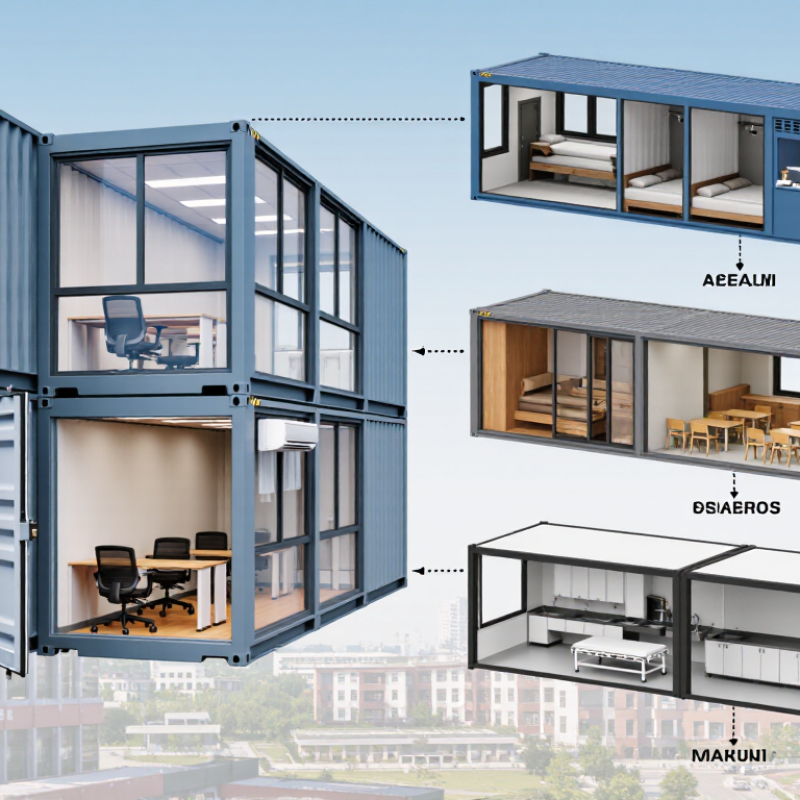
Modular containers are built for different purposes, so their layouts and materials vary considerably. The main types include storage units, site offices, accommodation units, sanitary units, and specialized service containers.
Storage containers usually have steel walls, lockable doors, and simple interiors. They protect tools, furniture, and boxed materials from rain and dust. Site office containers add insulation, windows, lighting, electrical outlets, and desks. On busy projects, workers often need a quiet room for drawings, meetings, and daily records. Small details matter. A poorly placed socket can become surprisingly inconvenient.
Accommodation containers require stronger attention to ventilation, temperature control, privacy, and fire-resistant materials. They may include bedrooms, kitchens, or compact living areas. Sanitary containers are designed with toilets, showers, sinks, water tanks, and drainage connections. Their surfaces should be easy to clean and resistant to repeated moisture. Specialized containers can support laboratories, workshops, medical services, kitchens, or technical equipment. These units often need extra ventilation, reinforced flooring, or controlled temperatures.
From practical planning experience, selecting a type should begin with its daily function, not its appearance. Check the internal dimensions, insulation rating, loading limits, access route, and utility connections. Qualified engineers or site professionals should verify structural and electrical details before installation. Container classifications are useful, but they are not perfect. Some units overlap in purpose, and a standard model may need careful modification. That part is easy to underestimate.
What Are the Top Types of Modular Containers?
Shipping containers and storage containers may look similar, but their purposes differ. Shipping containers are engineered for repeated lifting, stacking, and transport. Their reinforced corner posts, weather-resistant doors, and strong steel frames support movement by truck, rail, or vessel. Storage containers usually remain on one site. They may use simpler structures, wider access doors, or features designed for convenient loading. They stay put.
A shipping container typically offers better structural protection during relocation. Its sealed doors help keep rain and dust outside, while marine-grade flooring handles heavy cargo. However, condensation can still appear on the ceiling during temperature changes. Storage containers may include roll-up doors, vents, or small access points. These features help with frequent entry, but they can reduce weather resistance if poorly fitted. A careful inspection should check door alignment, floor softness, roof dents, and rust around welds.
The distinction is not always neat. Some used shipping containers become practical storage units after years of service. Others look solid but carry hidden moisture damage. An experienced supplier should provide dimensions, condition details, and safe load guidance. Choose a shipping model when future relocation matters. Choose a storage model when access and fixed placement matter more. A quiet detail matters: the ground must be level and well-drained. Without that, even a strong container can develop door problems. I would also allow room for maintenance, although this is easy to overlook.
| Container Type | Primary Function | Typical External Size | Typical Internal Capacity | Main Features | Common Applications |
|---|---|---|---|---|---|
| Standard Shipping Container | Intermodal transport and secure storage | 20 ft or 40 ft long; approximately 8 ft wide; 8 ft 6 in high | Approximately 33 m³ for a 20 ft unit; 67 m³ for a 40 ft unit | Steel construction, corner castings, lockable cargo doors, and standardized handling dimensions | International freight, domestic transport, construction-site storage, and general cargo protection |
| Storage Container | Stationary or short-distance storage | Commonly 10 ft, 20 ft, or 40 ft long; approximately 8 ft wide | Approximately 16–67 m³, depending on length and height | Lockable steel shell, weather-resistant construction, ventilation openings, and optional personnel doors | Household goods, tools, inventory, documents, equipment, and temporary on-site storage |
| High-Cube Container | Transport or storage of high-volume cargo | 20 ft or 40 ft long; approximately 8 ft wide; 9 ft 6 in high | Approximately 37 m³ for a 20 ft unit; 76 m³ for a 40 ft unit | About 1 ft taller than a standard container, providing additional vertical clearance | Lightweight bulky goods, machinery, furniture, retail inventory, and modified modular rooms |
| Refrigerated Container | Temperature-controlled transport and storage | Typically 20 ft or 40 ft long; approximately 8 ft wide; usually 8 ft 6 in or 9 ft 6 in high | Approximately 28–67 m³, depending on size and insulation thickness | Insulated walls, powered refrigeration equipment, temperature monitoring, and specialized flooring | Food, pharmaceuticals, flowers, chemicals, and other temperature-sensitive products |
| Open-Top Container | Transport of cargo that must be loaded from above | Usually 20 ft or 40 ft long; approximately 8 ft wide | Approximately 32–66 m³ | Removable roof or weatherproof tarpaulin, standard corner castings, and rear cargo doors | Scrap metal, timber, stone, machinery, and tall or irregularly shaped cargo |
| Flat-Rack Container | Transport of oversized or heavy cargo | Typically 20 ft or 40 ft long; approximately 8 ft wide | No enclosed volumetric capacity; cargo space is defined by the platform and end walls | Open sides, reinforced floor, lashing points, and fixed or collapsible end walls | Heavy machinery, vehicles, industrial components, pipes, and construction materials |
| Tank Container | Intermodal transport of liquids, gases, and powders | Usually based on a 20 ft frame; approximately 8 ft wide | Commonly about 14,000–26,000 liters, subject to tank design and cargo density | Pressure-rated tank vessel, protective frame, valves, and safety fittings | Food-grade liquids, chemicals, fuels, gases, and industrial powders |
| Office or Accommodation Container | Personnel space or temporary modular facilities | Commonly 10 ft, 20 ft, or 40 ft long; approximately 8 ft wide | Approximately 16–67 m³ before interior partitions and fittings | Insulation, electrical wiring, lighting, windows, doors, flooring, and optional heating or cooling | Site offices, classrooms, welfare rooms, security cabins, clinics, and temporary accommodation |
Modular containers now serve far more than temporary storage. Their layouts can support offices, homes, studios, classrooms, and flexible workspaces. The best choice depends on insulation, ventilation, access, and daily occupancy rather than appearance alone.
For offices, stackable modules create meeting rooms, private workstations, and reception areas with predictable installation times. A well-designed unit should include acoustic panels, cable routes, safe lighting, and windows positioned for balanced daylight. Smaller team offices may benefit from linked containers, while larger operations often need wider modular rooms. Measure twice.
Homes require stronger attention to thermal comfort and moisture control. Insulated living modules can form bedrooms, kitchens, bathrooms, or compact guest houses. High-quality doors, efficient ventilation, and durable flooring make a noticeable difference during winter and humid weather. Plumbing placement also matters, because late changes can increase labor and maintenance costs. Many attractive layouts fail here.
For creative workspaces, open-plan modules provide room for desks, tools, or production equipment. Partitioned units work better when concentration and noise control are important. A workshop may need reinforced floors, additional power points, and washable wall surfaces. A home office may only need reliable internet, daylight, and a comfortable work zone. Not every plan works. Speaking with a qualified designer and checking local building requirements helps confirm structural safety, fire protection, and accessibility before installation.
Comparative suitability ratings from 1 (limited fit) to 5 (excellent fit), based on typical space, mobility, installation, and customization requirements.
Volumetric modular units are generally the strongest choice for permanent offices and homes, while converted shipping containers and portable cabins are well suited to mobile workspaces and temporary facilities. Flat-pack units provide a practical balance between transport efficiency and flexible installation.
Choosing the right modular container starts with the site, not the catalogue.
Storage containers suit tools, materials, and short-term inventory. Office units need insulation, daylight, wiring, and safe access. Sanitary units require dependable water, drainage, ventilation, and cleaning space. Refrigerated units demand stable power and temperature monitoring. Hybrid units combine these functions, but their installation is more demanding.
Match the container to its operating environment. The International Energy Agency reports that buildings consume about 30% of global final energy. Poor insulation can therefore create high running costs, especially in hot or cold regions. Check wall panels, roof insulation, floor loading, ventilation, fire protection, and expected occupancy. A coastal site also needs corrosion-resistant finishes. Measure delivery routes carefully. A perfect unit is useless if a crane cannot reach the foundation.
Industry data supports careful planning. Grand View Research valued the global modular construction market at approximately 91.7 billion dollars in 2023, with continued growth forecast through 2030. However, these reports often combine containerized buildings with broader modular construction. That limitation matters. Compare technical specifications, not headline market figures. Ask for load ratings, energy performance evidence, maintenance records, and installation tolerances. I would also allow spare capacity for future changes. Yet oversizing can waste money and transport space. The right choice is the smallest container that safely supports real work.
| Cookie | Duration | Description |
|---|---|---|
| cookielawinfo-checkbox-analytics | 11 months | This cookie is set by GDPR Cookie Consent plugin. The cookie is used to store the user consent for the cookies in the category "Analytics". |
| cookielawinfo-checkbox-functional | 11 months | The cookie is set by GDPR cookie consent to record the user consent for the cookies in the category "Functional". |
| cookielawinfo-checkbox-necessary | 11 months | This cookie is set by GDPR Cookie Consent plugin. The cookies is used to store the user consent for the cookies in the category "Necessary". |
| cookielawinfo-checkbox-others | 11 months | This cookie is set by GDPR Cookie Consent plugin. The cookie is used to store the user consent for the cookies in the category "Other. |
| cookielawinfo-checkbox-performance | 11 months | This cookie is set by GDPR Cookie Consent plugin. The cookie is used to store the user consent for the cookies in the category "Performance". |
| viewed_cookie_policy | 11 months | The cookie is set by the GDPR Cookie Consent plugin and is used to store whether or not user has consented to the use of cookies. It does not store any personal data. |